Rome with SilviaBlog
The Pantheon:Rome's Magnificent Temple of the Sun
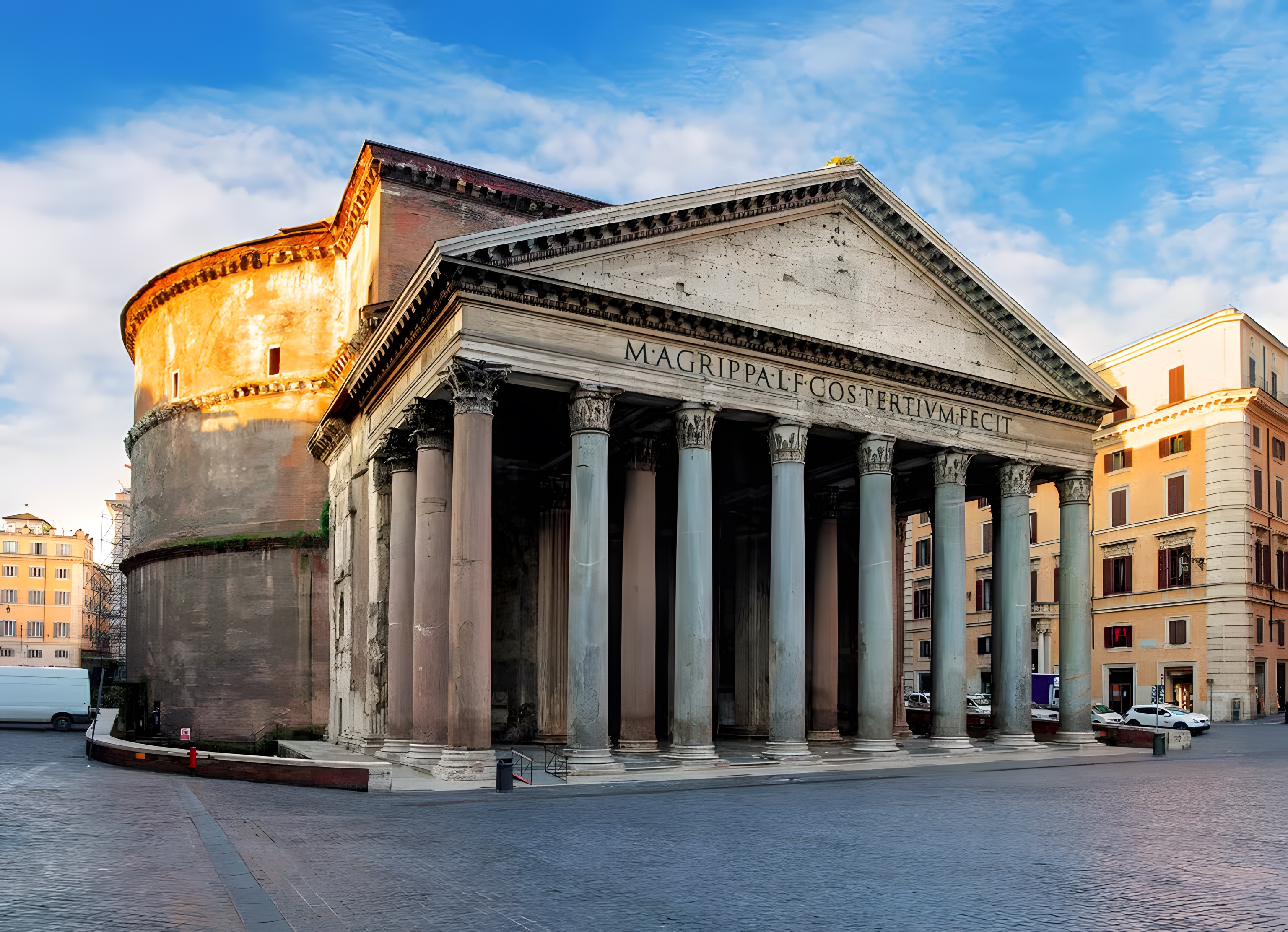
According to several scholars, the Pantheon, one of the greatest masterpieces of ancient Roman architecture, also functioned as a gigantic spherical sundial. Every day at noon, sunlight enters through the great oculus at the center of the dome, projecting a circle of light toward the north side of the building, where the monumental bronze entrance doors stand.
As the seasons change, this circle of light appears at different heights, marking the passage of time throughout the year. On the winter solstice (21 December), it reaches its highest position, illuminating the upper part of the dome. During the spring and autumn equinoxes (around 21 March and 23 September), the sunlight strikes the area immediately above the entrance, also illuminating the cornice at the base of the dome, which many scholars interpret as representing the Earth’s equator.
On 21 April, the traditional birthday of the city of Rome (Dies Natalis Romae), the circle of light perfectly illuminates the entrance portal. Finally, on the summer solstice (21 June), a large circle of sunlight appears almost at the center of the marble floor.
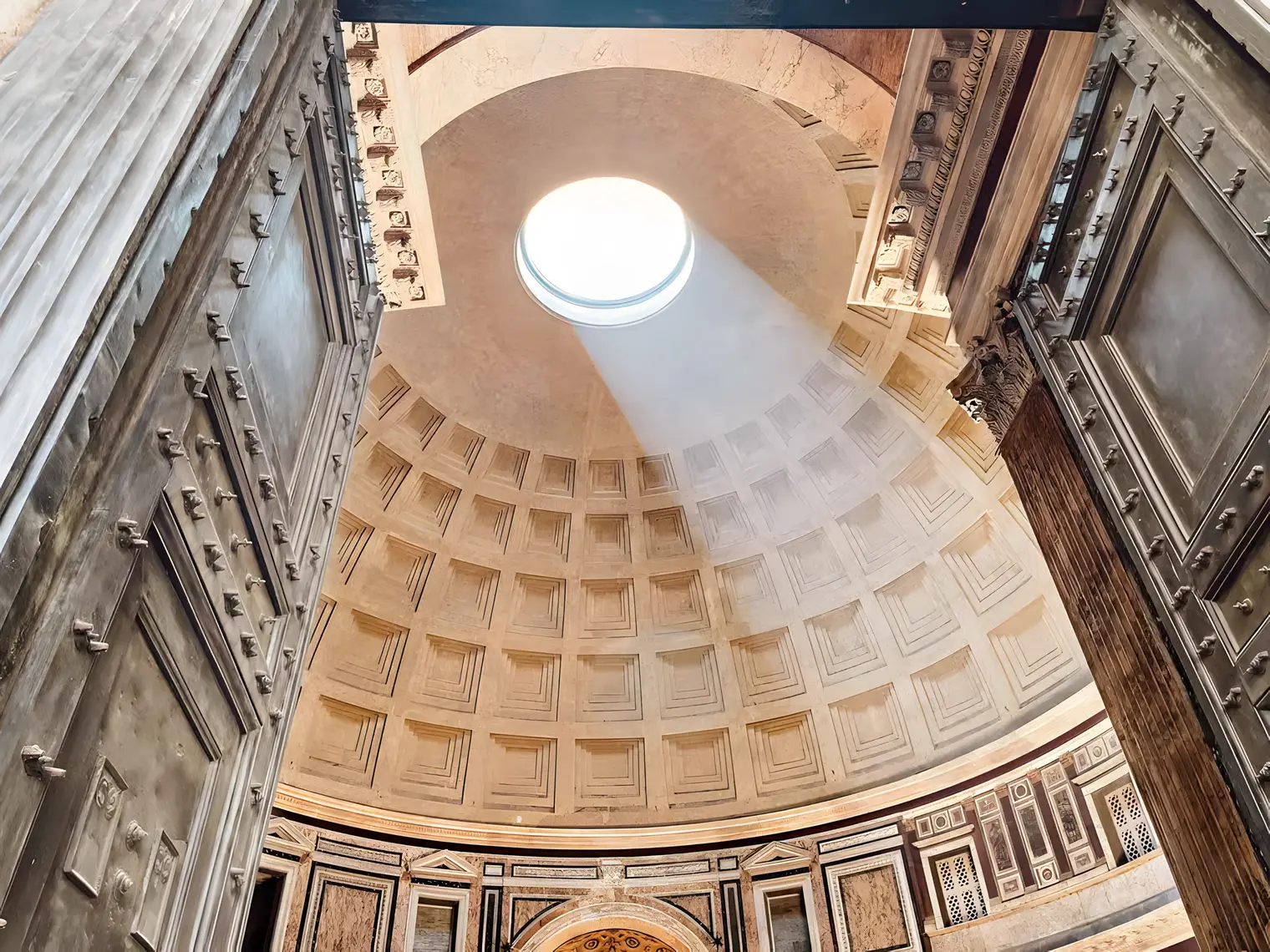
Another fascinating phenomenon, identified and studied in 2014, is known as the “Arch of Light.” Twice each year—around 7 April and 4 September—for several consecutive days, the sunlight entering through the oculus perfectly illuminates the masonry arch above the entrance. This alignment is far from accidental: the arch has the same diameter as the oculus, approximately 9 metres, allowing it to be completely filled with light.
At the same time, outside the building, directly in front of the entrance, a remarkable Square of Light appears on the pavement. The illuminated area precisely matches the geometric design of the original floor, highlighting a square of purple pavonazzetto marble surrounding a circle of grey granite.
When compared with the ancient Roman calendar, these dates reveal an intriguing connection.
On 6 April, the Romans celebrated a festival dedicated to Diana, goddess of the Moon, symbolized by the crescent moon. The following day, 7 April, was dedicated to Apollo, god of the Sun, whose symbol was the bow. Between 7 and 10 April, the Ludi Megalenses were also celebrated in honour of the Magna Mater (Cybele), the great mother goddess.
Around 4 September, when the Arch of Light appears once again, Rome celebrated the Ludi Romani, the great games dedicated to Jupiter Optimus Maximus, protector of the city.
These extraordinary displays of light are the result of sophisticated mathematical and astronomical calculations. They should also be understood through the symbolism of two fundamental geometric shapes in Roman culture: the circle, representing the divine, and the square, symbolizing the earthly world.
It is worth noting that the architectural elements responsible for these phenomena—the oculus, the monumental bronze doors, and the masonry arch above them—are all original Roman features. Like almost every other part of the building, they have survived because, in AD 609, Emperor Phocas donated the Pantheon to Pope Boniface IV, who converted it into the Christian church of Santa Maria ad Martyres.
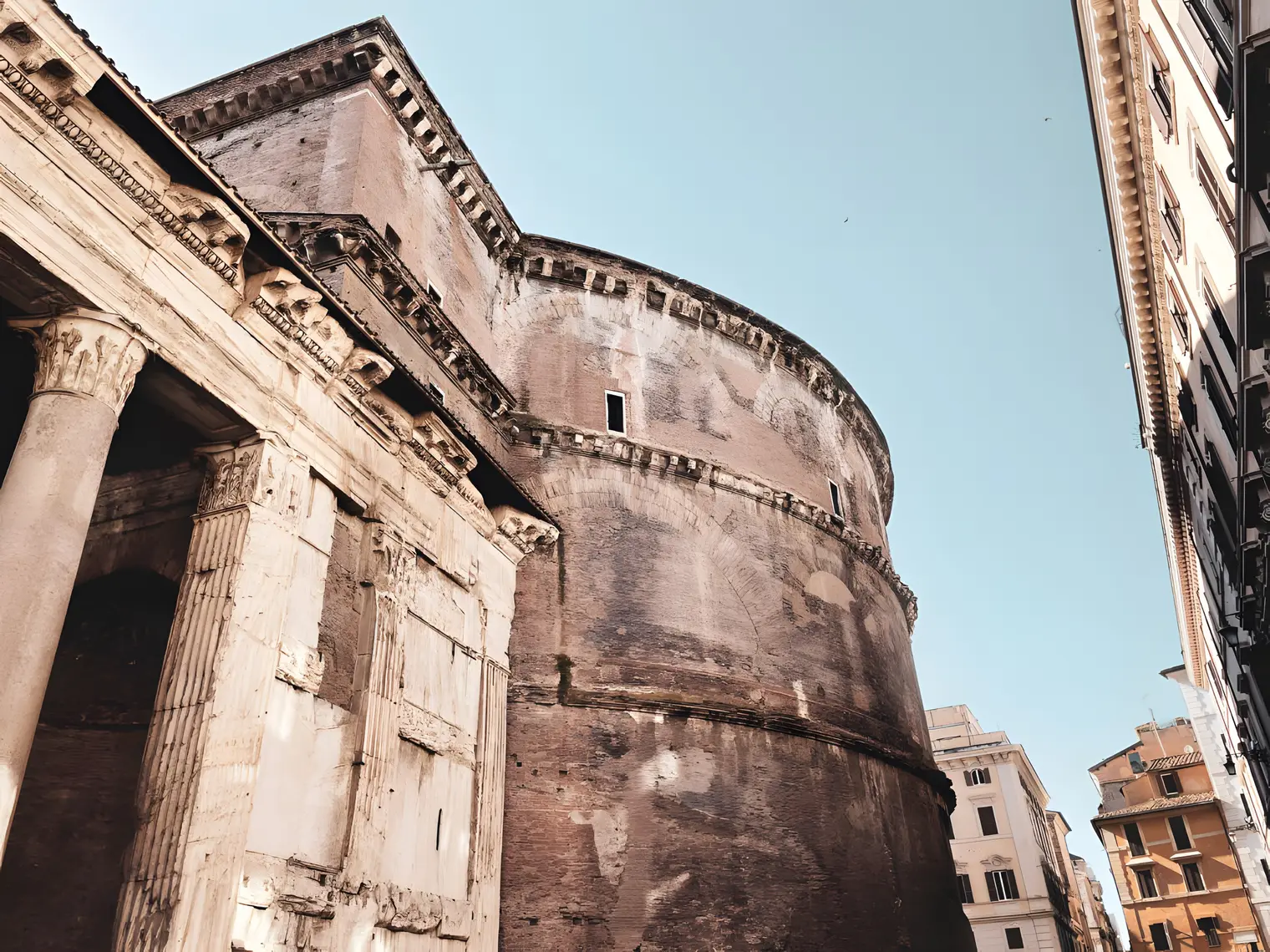
The Pantheon’s sophisticated astronomical symbolism is echoed in the remarkable numerical design of its interior architecture.
The building is structured around the number twenty-eight: there are twenty-eight radial divisions (often referred to as meridians), twenty-eight coffers within each decorative ring of the dome, as well as repeated groups of columns, pilasters, and ornamental elements based on the same number.
Equally significant is the number five, represented by the five concentric rings of coffers surrounding the oculus.
For the Pythagoreans, the number five was associated with Venus and the five planets visible to the naked eye. Adding the Moon—represented by the twenty-eight coffers recalling its twenty-eight-day cycle—and the Sun, symbolized by the oculus itself, we obtain the seven wandering celestial bodies known to the ancient world: Mercury, Venus, Mars, Jupiter, Saturn, the Moon, and the Sun.
(Uranus, by contrast, remained unknown until its discovery through a telescope in 1781.)

Silvia Tofoni
Founder and licensed local guide at Rome with Silvia.