Rome with SilviaBlog
Ancient and Modern Rome:Myth and History of the Eternal City
One of the best-known Latin expressions is undoubtedly ab urbe condita, meaning “from the founding of the City.” According to Roman tradition, that moment dates back to 21 April 753 BC, taking us on a journey more than twenty-seven centuries into the past.
But how do we know that Rome was founded in that very year? The answer comes primarily from ancient literary sources. Roman authors such as Varro and Plutarch preserved the story of their city’s origins, calculating the date that would eventually become the official beginning of Roman history. It was undoubtedly an ambitious reconstruction, yet understanding what truly happened in those distant centuries requires us to place events in their proper historical context.
After all, Rome was not built in a day. The famous saying reminds us that separating historical reality from myth is no easy task, especially in an age when historical truth and cultural identity were often inseparable. So how much truth lies behind the legend of Romulus and Remus? Setting aside the most legendary elements of the story, should we believe that Romulus was a real historical figure? And even if we accept the possibility of his existence, how could one man have founded Rome and created its people? In other words, where did the Romans actually come from?
Long before the arrival of Aeneas, Evander, or Romulus, the territory known as the Latium Vetus was already inhabited. Ancient communities had established small settlements of huts scattered across strategically positioned hills. These hills did not yet correspond to the traditional list of Rome’s famous Seven Hills.
Rome emerged through the gradual union of these scattered villages, a process known as synoecism—the merging of separate communities into a single urban center.
So where does Romulus fit into this story?
The answer lies in the cultural power of myth. The legend of Romulus became the foundation of Roman identity, shaping how the Romans understood themselves and their origins. Yet this opens the door to many other questions. Take, for example, the famous list of the Seven Kings of Rome. What if I told you there were not actually seven?
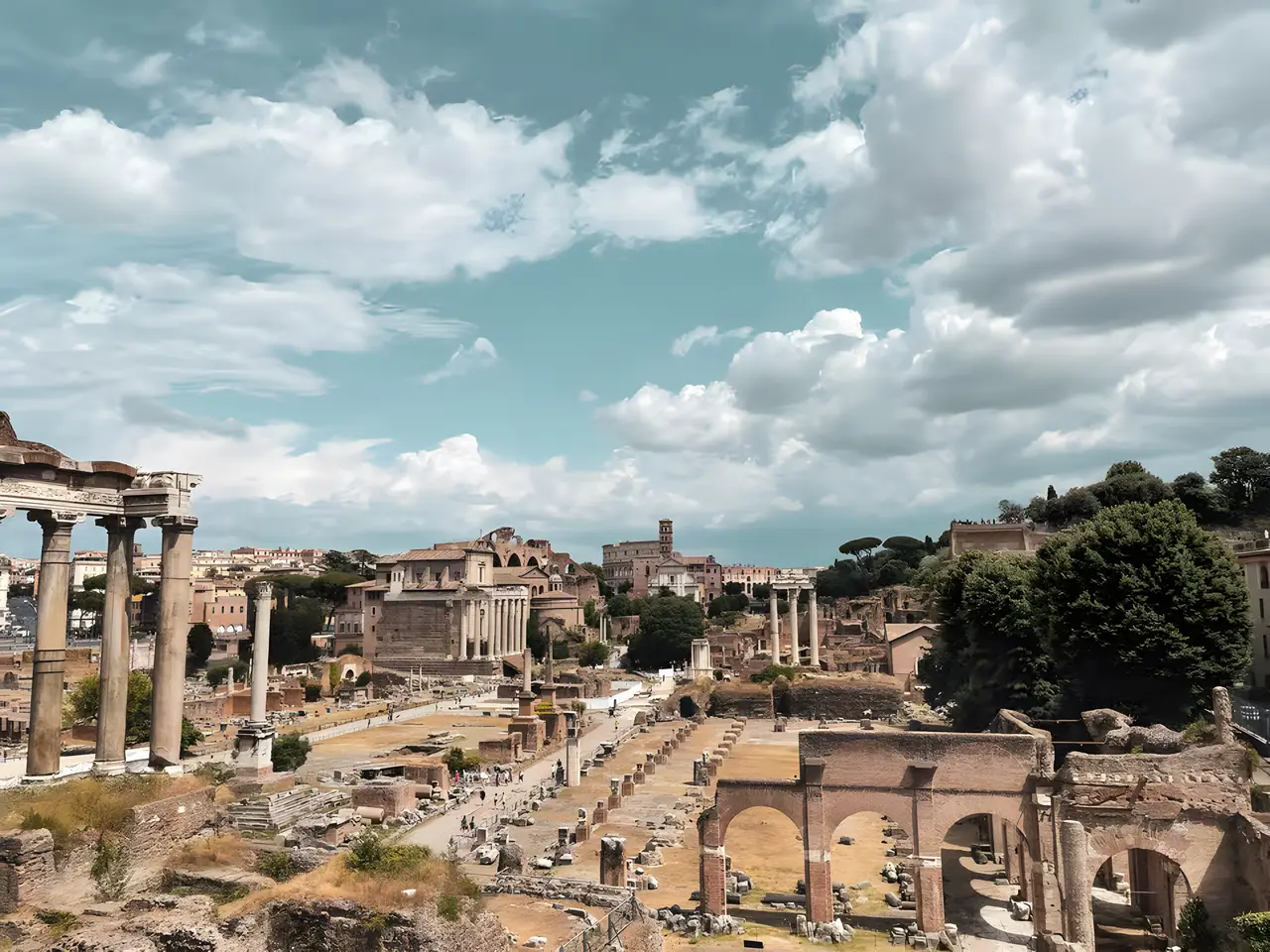
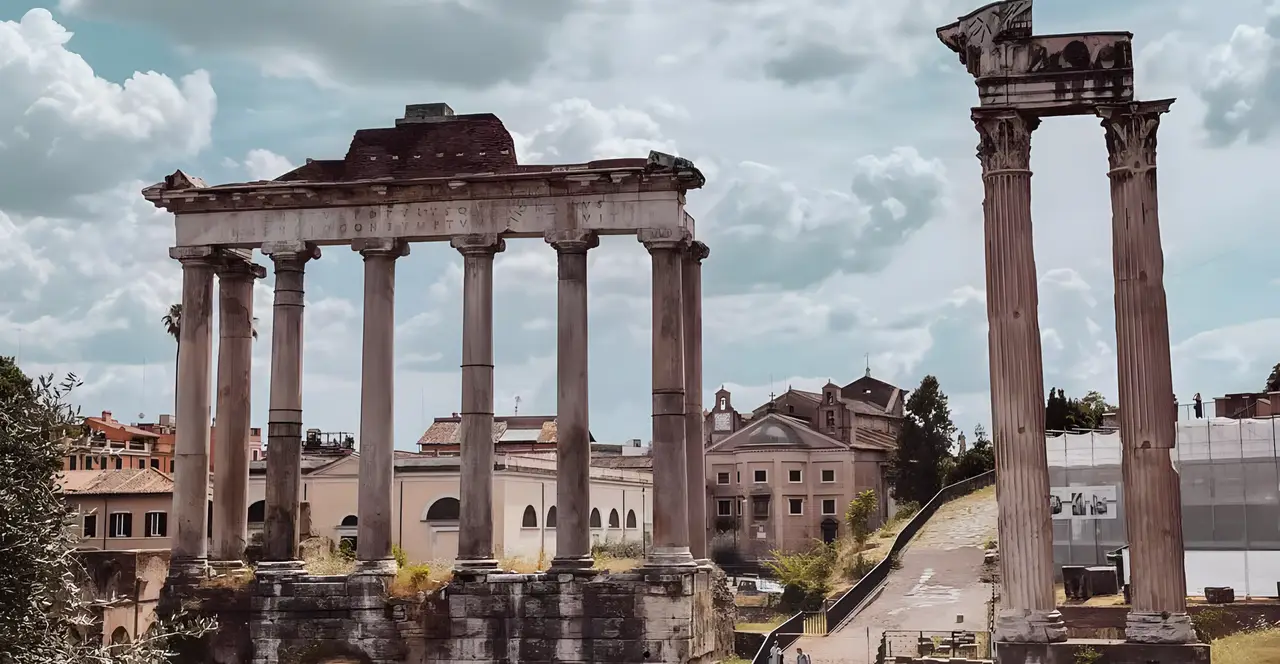
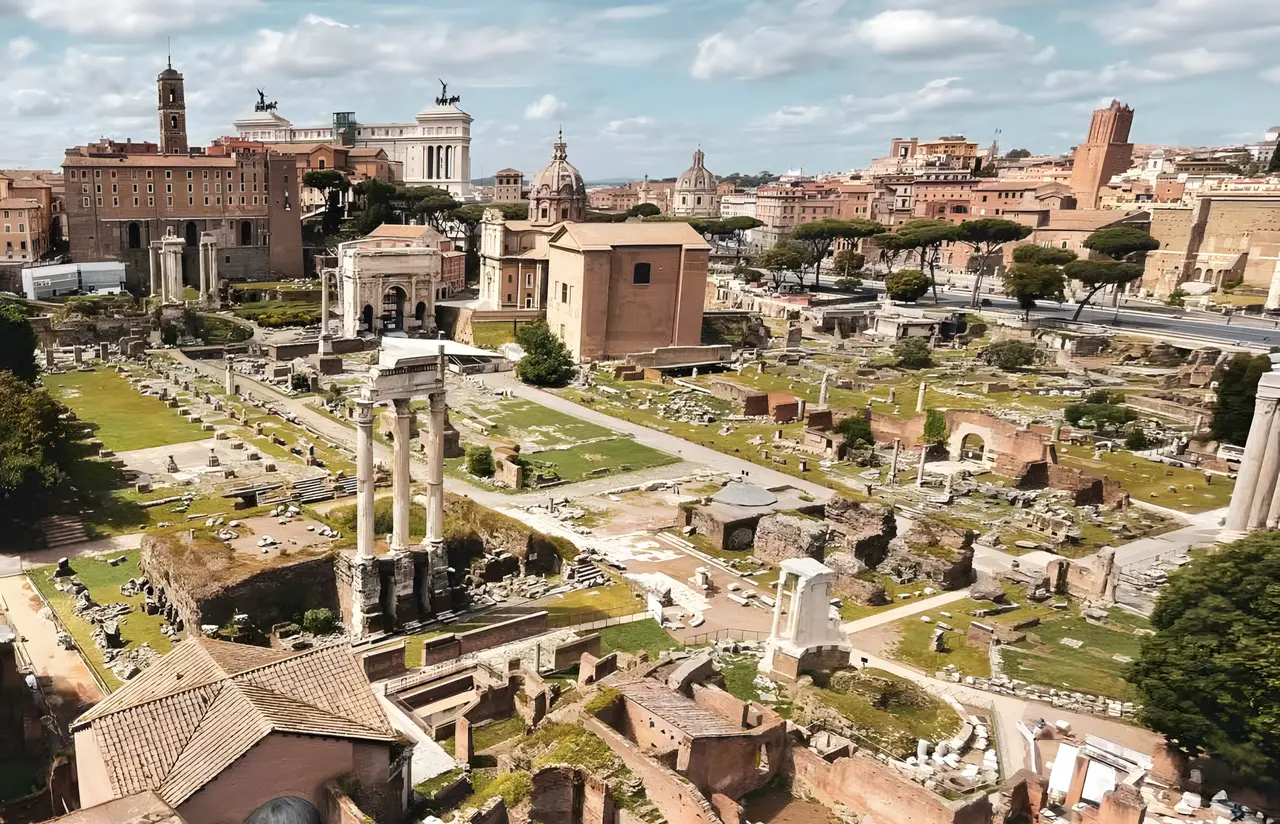
As you may have realized, discussing the origins of Rome is a delicate undertaking, particularly when archaeology enters the picture. Some of the most fascinating debates remain unresolved, as is the case with the celebrated Via Sacra, or Sacred Way.
This was one of ancient Rome’s most important roads, crossing the Forum Valley from one end to the other. For generations, archaeologists have debated its original route, attempting to reconcile the descriptions found in ancient texts with the archaeological evidence uncovered over the centuries.
If the exact course of the original Via Sacra could finally be established, it would also solve the long-standing question of where the monuments described by ancient authors actually stood. Unfortunately, the task is anything but simple. Ancient sources often contradict one another, and archaeological evidence can be equally difficult to interpret.
Some scholars argue that the Via Sacra began near the Sacellum of Strenia in the Carinae district, while others believe its original route was considerably shorter. For some, the Regia marked its endpoint; for others, the road continued all the way to the Capitoline Hill.
Even the expression summa Via Sacra, mentioned by ancient writers, remains open to interpretation. Did summa refer to the road’s highest point, or to its most prestigious section, where Rome’s most important religious buildings stood?
One fact, however, is beyond dispute. The route of the Via Sacra changed dramatically over time, especially after the devastating Great Fire of AD 64. In the aftermath of the disaster, Nero initiated an ambitious urban redevelopment of the Forum, a project later continued by the Flavian emperors. During this transformation, the Via Sacra was straightened and monumentalized, lined with impressive porticoes and tabernae, gradually taking on the appearance of a grand ceremonial boulevard.
The debate, however, is far from over.
Even today, when walking from the Colosseum Valley toward the Arch of Titus, visitors encounter a sign reading Via Sacra, suggesting that the uphill stretch beginning near the ruins of the Meta Sudans belongs to the ancient road itself. Yet recent archaeological research proposes abandoning this traditional interpretation, identifying that section instead with the lesser-known Vicus Curiarum, located near the Curiae Veteres.
So what should we believe?
The subject becomes even more complex when we turn to Rome’s foundation myth.
"There was a sacred place, covered by a thick grove, and within it a hollow rock from which a spring flowed.
The grove was said to be sacred to Pan... Here the she-wolf came and hid. The grove no longer exists, but the cave from which the spring still flows can be seen at the foot of the Palatine Hill, beside the road leading to the Circus... This place the Romans called the Lupercal."
So wrote Dionysius of Halicarnassus in his Roman Antiquities.
According to tradition, beneath the shade of the Ficus Ruminalis, at the foot of the Palatine Hill, the basket carrying Rome’s twin brothers came to rest. Born from the violated chastity of the Vestal Virgin Rhea Silvia, who had conceived them by the god Mars, Romulus and Remus were saved from death and suckled by the she-wolf inside the mysterious cave known as the Lupercal.
Thus unfolds the famous legend of Romulus and Remus, bound together by destiny until only one survived. Romulus’ killing of his brother after he crossed the sacred boundary known as the pomerium would forever shape the future of what would become the capital of the greatest empire of the ancient world.
Poetic and tragic at the same time, the myth deserves to be understood for its cultural significance. This perspective has inspired generations of archaeologists—including some of the most cautious scholars—to search for the legendary cave where Rome’s story began, a site that may have been rediscovered in 2007.
The goal has always been to find a balance between uncompromising historical skepticism and naïve acceptance of legend—to see the world as the Romans saw it, and to understand what they themselves believed.
Even scholars who reject the myth as literal history acknowledge that the memory of the Lupercal survived through the celebration of the Lupercalia.
In the middle of February—a month whose very name derives from the Latin februare, “to purify”—the Romans celebrated rituals intended to cleanse the community before the beginning of the new year, according to their earlier calendar. A sacrificial goat, serving as a symbol of purification, was offered, and strips of its hide were cut into thongs. The Luperci, the priests of the ceremony, ran naked along the Via Sacra, striking women lightly with these leather strips as a ritual intended to promote fertility.
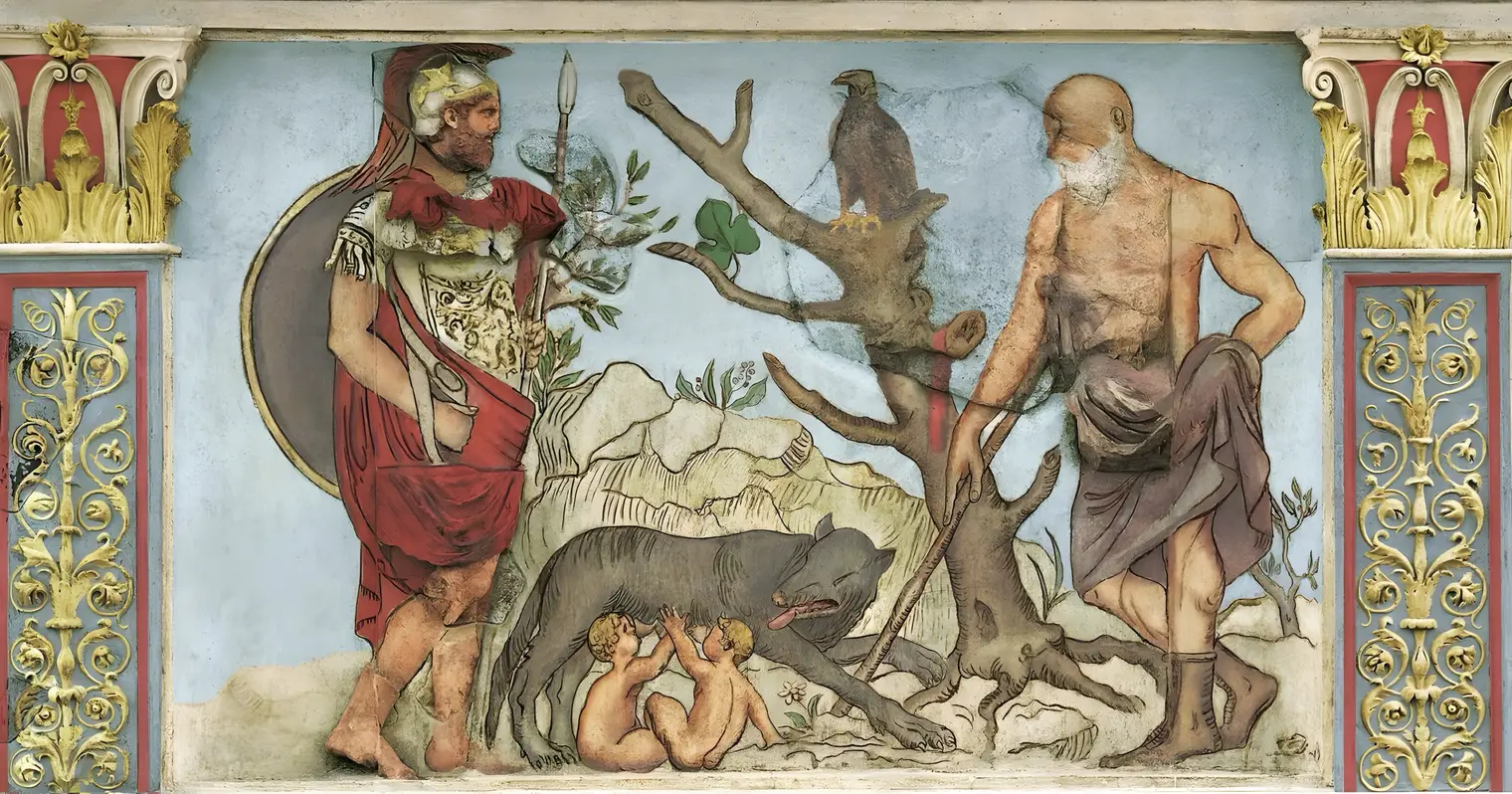
And it was precisely near the place where these ancient ceremonies had been celebrated for centuries that, in AD 330, Emperor Constantine attended the first celebration of Christmas on 25 December in the nearby Church of Sant’Anastasia.
For the Romans, this was already a deeply significant day: the feast of the Sol Invictus, the Unconquered Sun, marking the culmination of the winter solstice celebrations.
Was this simply the Christianization of a pagan festival?
Perhaps.
What is certain, however, is that the journey from the Lupercalia to the Christian celebration of Christmas spans centuries of history.
Yet it is remarkable how consistently these traditions seem to intertwine.
The cave where the twins were suckled by the she-wolf became the sacred place of the Lupercalia. On that very site, Augustus, Rome’s first emperor and a “new Romulus” in the service of imperial propaganda, built his official residence.
Likewise, the festival celebrating the rebirth of the Sun eventually coincided with the Christian feast of Christ’s Nativity, celebrated in the city whose own “birthday” was traditionally commemorated on 21 April 753 BC. That date coincided with the ancient festival of the Parilia, dedicated to the goddess Pales, protector of shepherds and flocks. The celebration combined rites of purification with offerings marking the birth of young goats—the Latin verb parere meaning “to give birth.”
When viewed together, these layers of history, myth, religion, and tradition form an extraordinary continuity.
Perhaps, after all, everything falls into place.

Silvia Tofoni
Founder and licensed local guide at Rome with Silvia.