Rome with SilviaBlog
The Fullonica and the Tax on Urine
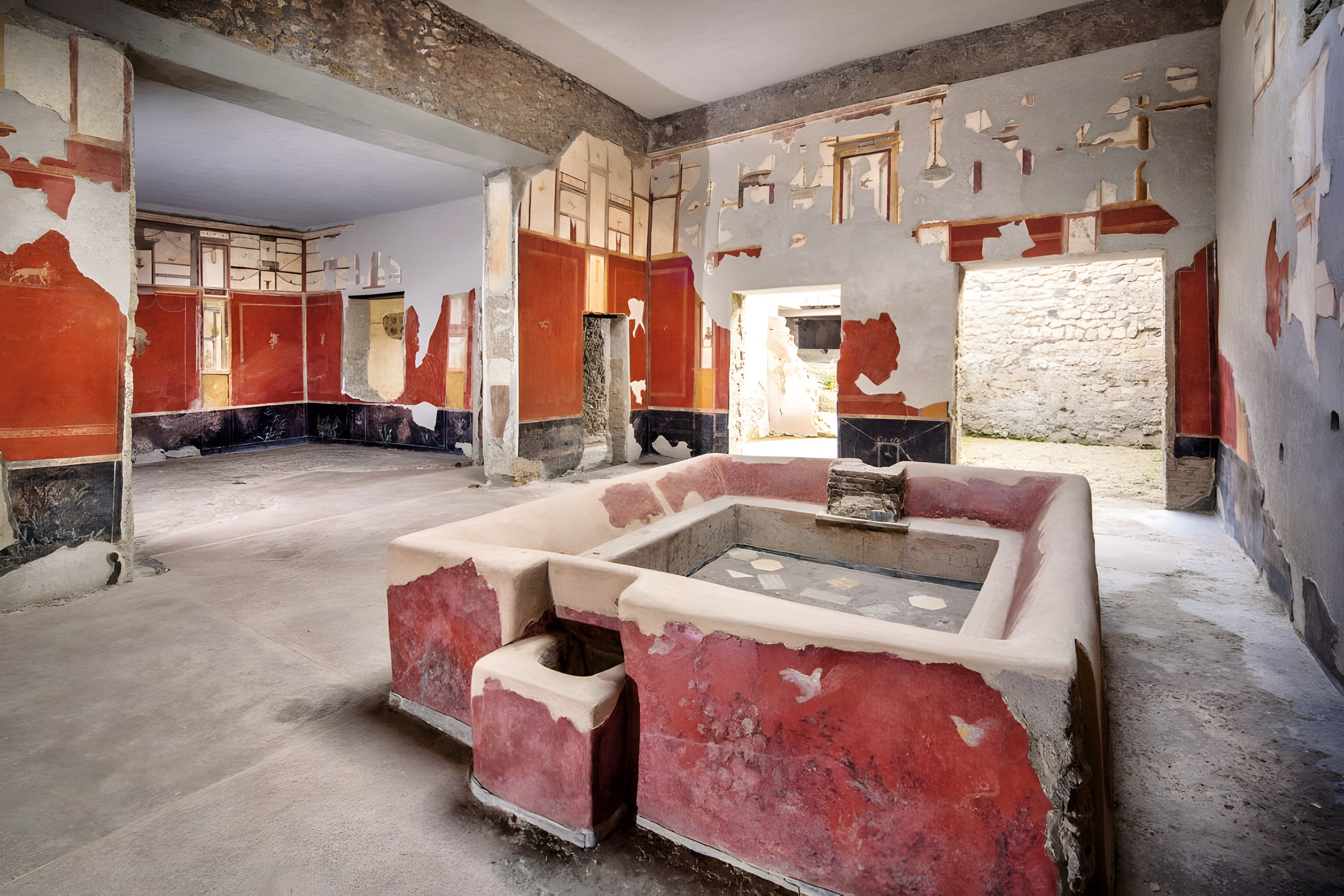
The fullonicae were among the most profitable businesses in the Roman Empire. Although they can be compared to modern laundries, their work was far more complex than simply washing dirty clothes.
A fullonica specialized not only in cleaning used garments but also in treating newly woven fabrics before they were sold at the market. Another important activity was dyeing textiles, as colourful clothing was considered a symbol of elegance, wealth, and refined taste in ancient Rome.
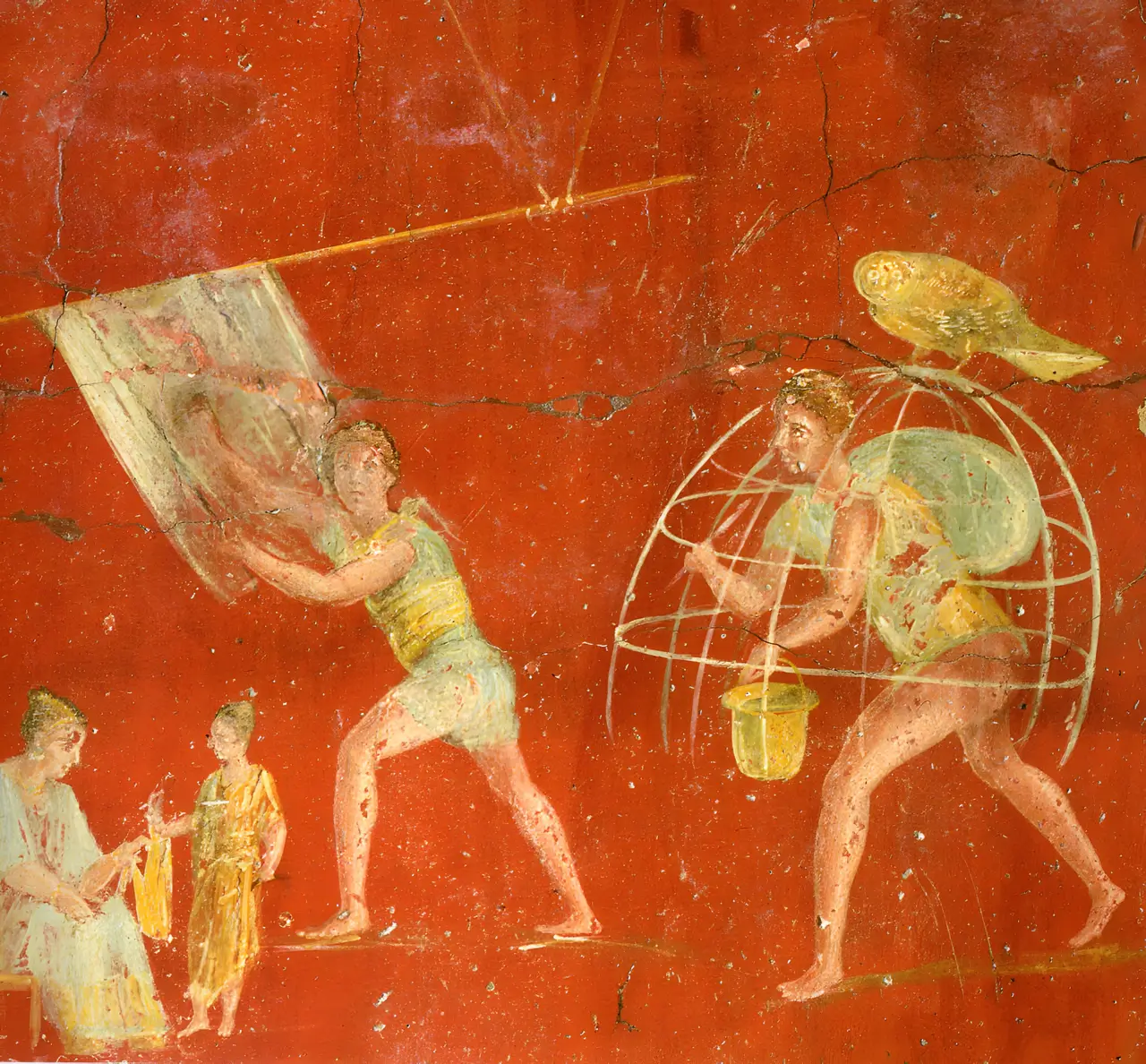
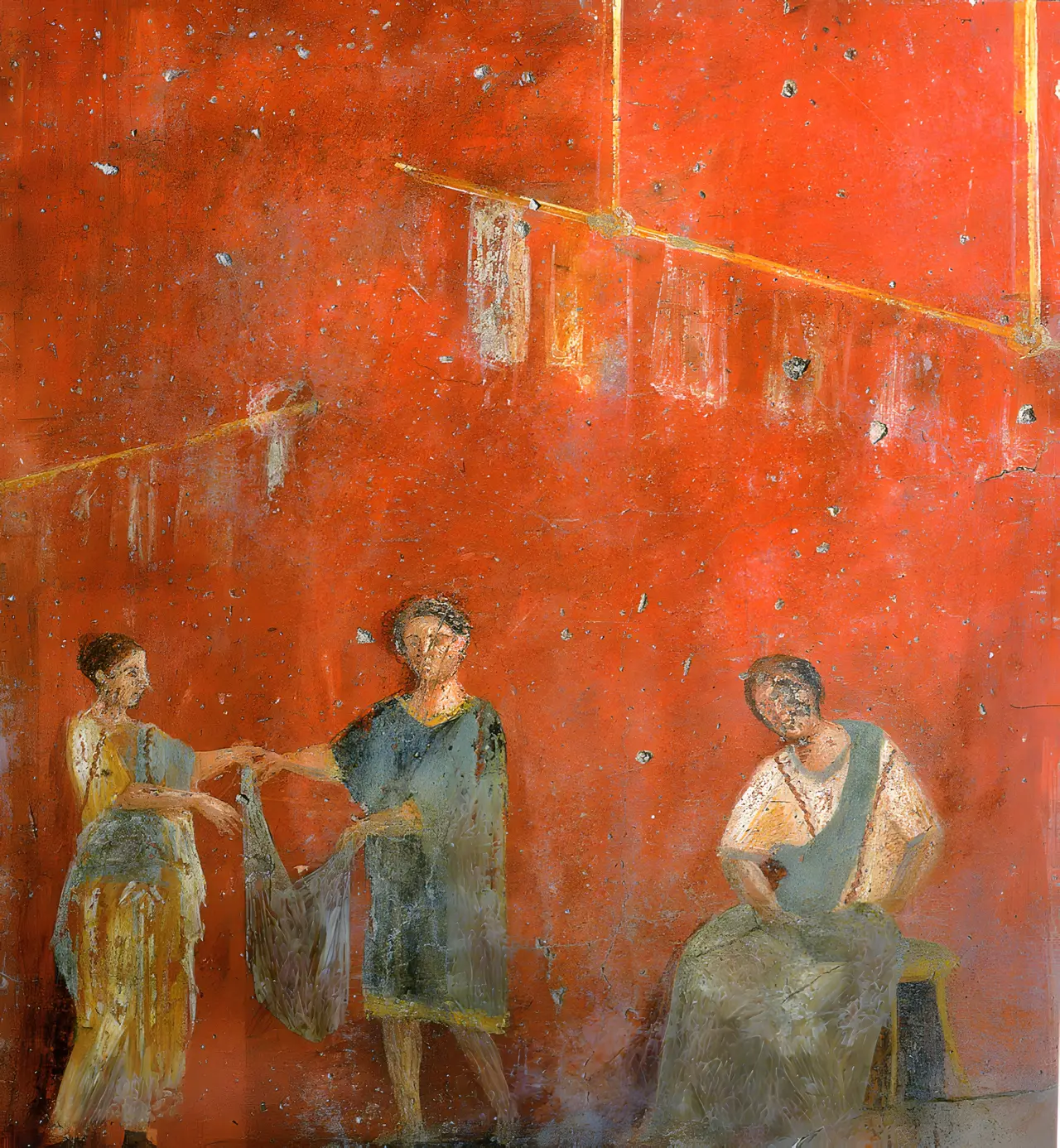
The workshops were equipped with distinctive washing areas featuring oval basins known as lacunae fullonicae, flanked by low walls. Inside these vats, workers called fullones cleaned both new and used fabrics by trampling them with their feet in a process known as the saltus fullonicus. While holding onto the side walls for balance, they used soda ash and urine, whose natural ammonia content gave them remarkable whitening and cleansing properties.
The fabrics were then rinsed in larger basins positioned at different heights, using clay and special earths that softened the textiles after the alkaline treatment. Finally, they were hung inside large drying areas on a viminea cavea, a wicker framework that exposed them to sulphur fumes for additional bleaching. Once dry, the fabrics were brushed and pressed using a large screw press known as the prelum, the Roman equivalent of an iron.
Urine was therefore an essential ingredient in the textile industry, but its use extended far beyond the fullonicae. It became such a valuable commodity that Emperor Vespasian, seeking to restore the imperial treasury after Nero’s extravagant spending, introduced a tax on its trade: the famous vectigal urinae, or urine tax.
The tax was levied on the purchase of urine collected from public latrines. It was paid not only by fullers but also by tanners, who used urine to soften animal hides and make hair removal easier.
Urine also had several other practical uses. It was believed to possess medicinal properties and, thanks to its high nitrogen and phosphorus content, was even used as a fertilizer in agriculture.
Recognizing the economic potential of this unusual commodity, Vespasian turned it into a source of public revenue. According to the historian Suetonius, when his son Titus criticized the tax, the emperor famously replied:
"Pecunia non olet."
"Money does not stink."
The saying has survived for nearly two thousand years and is still used today to suggest that money has no moral or social “smell,” regardless of its origin.
The Roman people, however, were far less enthusiastic about the new tax. In a form of ancient political satire similar to Rome’s famous pasquinades, they began referring to public urinals by the emperor’s name.
Ironically, that nickname has endured through the centuries. Even today, in several European countries, public urinals are still commonly known as “vespasiani”—or simply vespasiennes—a lasting reminder of one of the most unusual taxes in Roman history.

Silvia Tofoni
Founder and licensed local guide at Rome with Silvia.